“Look,” whispered Chuck, and George lifted his eyes to heaven. (There is always a last time for everything.)
Overhead, without any fuss, the stars were going out.
- The Nine Billion Names of God, Arthur C. Clarke
I recently finished Bart D. Ehrman’s Heaven and Hell: A History of the Afterlife. In the afterword, Ehrman reflects on the afterlife as someone who was raised in the Episcopal church before becoming agnostic later in life. He contemplates death as a simple fading away: no apocalypse, no resurrection, and no fanfare.
Reading it made me cry. I was raised religious. It is a part of me I will never quite be able to shake off. I no longer believe in a literal heaven or hell, but there is something in me that resists the thought of simply ceasing to be. As I read Ehrman’s afterword, I forced myself to imagine it: just blinking out of existence. And only then did I realize how heavy eternity feels. And how constantly I feel it.
There is a reality where things don’t have to be so serious, so burdensome. A reality where the stars can go out without any fuss.
Phoebe Bridgers’ I Know the End, from her sophomore album Punisher, evokes the same feelings that Ehrman’s afterword does.
Sonically, the music in the first half of the song is sparse, with just Bridgers and her guitar. The melody is melancholy, her voice quiet and restrained. The lyrics depict a speaker struggling to come to terms with life’s monotony and the weight of depression. Days and places blur together (Somewhere in Germany, but I can’t place it / Man, I hate this part of Texas), and an emptiness settles over both her personal world and the world at large (Not even the burnouts are out here anymore). Then, the song shifts.
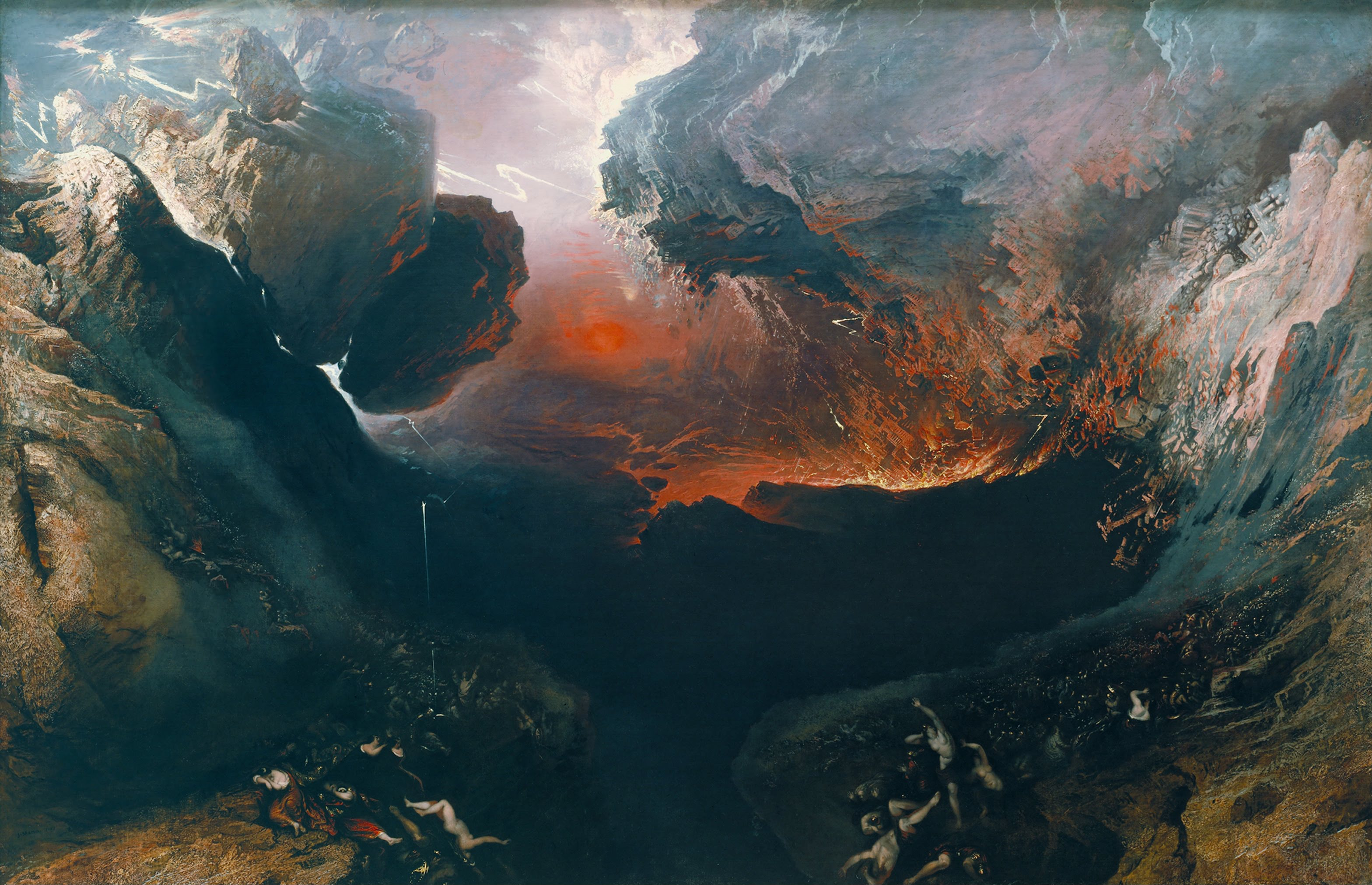
A trumpet signals the transition to the second half of the song. The trumpet’s presence is no coincidence. Across religious traditions, trumpets are harbingers of the end. The Book of Revelation speaks of seven trumpets, each marking a stage of the apocalypse. The Quran refers to the blowing of the trumpet as a sign of the Day of Judgment, appearing is verses 6:73, 18:99, 20:102 to name a few.
On that day We shall leave them to surge like waves on one another; The trumpet will be blown, and We shall collect them all together.1
And the third angel sounded the trumpet, and a great star fell out of heaven burning like a torch, and it fell upon one third of the rivers and upon the springs of the waters; And the star’s name is called Wormwood. And one third of the waters turned into wormwood, and a great many human beings died from the waters because they were embittered.2
The apocalypse, both in I Know the End and in the Quran, are accompanied by a sense of clarity. In his commentary on the Quran, Abdullah Yusuf Ali explains that with the first trumpet of resurrection, the world as we know it will cease to be. Humans will be dazed and lose all consciousness. But with the second trumpet, they will stand in a new world and see with clearer vision than ever before.
The Trumpet will (just) be sounded, when all that are in the heavens and on earth will swoon, except such as it will please Allah (to exempt). Then will a second one be sounded, when, behold, they will be standing and looking on! (Quran 39:68, translated by Abdullah Yusuf Ali)
This theme of clarity echoes in the lyrics that follow the trumpet’s call in I Know the End:
Drivin’ out into the sun
Let the ultraviolet cover me up
Went looking for a creation myth
Ended up with a pair of cracked lips
The speaker drives into the sun, a metaphor for her meeting her absurd and apocalyptic reality head-on. This solar imagery (ultraviolet, cracked lips) also evokes the myth of Icarus. She set out in search of a creation myth, an origin story to make sense of it all. But she finds nothing. She wanted it so desperately that she flew too close to the sun, left parched and empty-handed.
Origins matter. We can’t help but feel they tell us something essential about our character and purpose in the world. The Hebrew Bible begins, of course, with Genesis, a story full of origins. But what happens when we abandon that story? When we simply can’t believe in it anymore? Where does that leave us? Where does it leave the speaker?
Over the coast, everyone’s convinced
It’s a government drone or an alien spaceship
Either way, we’re not alone
I’ll find a new place to be from
A haunted house with a picket fence
To float around and ghost my friends
The answer is hopeful: Either way, we’re not alone. Even if she can’t find a creation myth - can’t bring herself to believe in the divine in any traditional sense - she can still glimpse something beyond herself in the secular world. She can create her own mythology (I’ll find a new place to be from).
These lines are also a reference to aliens, a theme that carries over from Bridgers’ song Chinese Satellite (which we will discuss in part 2). Ultimately, we just want to know we are not alone in this universe. We want to feel that there is something greater at play - whether that be intelligent extraterrestrial life or the God of Moses.
Bridgers also invokes the image of the picket fence, a symbol of idealized American suburban life, only to turn it on its head. She knows she will never have the traditional white-picket-fence dream, but, just as with the creation myth, she will carve out some version of it for herself.
No, I’m not afraid to disappear
The billboard said “The End Is Near”
I turned around, there was nothing there
Yeah, I guess the end is here
The end is here
The end is here
The end is here
The end is -
The repetition of “The end is here” is sung by a chorus. One imagines the speaker looks behind her to see nothing at all, that the nothingness swallows her up, and she becomes part of the collective voice chanting those final lines.
But then, the final line is cut short. The chorus swells into cacophony and guttural screaming. These are not the cries of agony one might expect from an apocalyptic ending. Instead, they are the cathartic sounds of release: the sound of acceptance, of surrender, of confronting oblivion without fear.
In an interview, Bridgers explains that she imagines herself in the song driving up to Northern California, to the place where her grandparents once lived.3 But they don’t live there anymore. She is heading towards a sanctuary that no longer exists. And just as the sanctuary she seeks is gone, so too is the world of genesis and apocalypse that she wished she could believe in.
If we’re being technical, the chorus of screaming isn’t quite the end of the song. After the screams fade, we hear Bridgers in the studio, weakly attempting to scream, interspersed with giggling. It’s a whimsical reminder that this really isn’t so serious.
Ultimately, I Know the End isn’t about the end at all. It is about the joy of catharsis. The world may not end in fire, brimstone, or divine reckoning. It may simply fade into a cathartic scream, a tired breath, and then - laughter.
Footnotes
Quran 18:99, translated by Abdullah Yusuf Ali↩︎
The Revelation of John 8:10-11, translated by David Bentley Hart↩︎
Genius, Phoebe Bridgers “I Know The End” Official Lyrics & Meaning↩︎