Genesis 12 begins with God instructing Abraham to leave his homeland of Haran. “Go from your country and your kindred and your father’s house,”1 God says. The destination is vague: it is simply “the land that I will show you”.2
Karen Armstrong has a poignant take on this passage:
Religious people often speak of “faith” as though it were a matter of conserving the old and traditional; they claim that it gives them absolute certainty and is not compatible with doubt. But Genesis shows that in fact faith began by demanding a radical break with the past and facing the terrors and enigmas of the unknown.3
I wasn’t raised (and still am not) Christian - I was raised Muslim. And sifting through the second and longest Surah in the Quran, I find similar themes:
When it is said to them, “Follow what Allah has revealed,” they reply, “No! We only follow what we found our forefathers practicing.” Would they still do so, even if their forefathers had absolutely no understanding or guidance?4
Although they used to pray for victory over the polytheists, when there came to them a Book from Allah which they recognized, confirming the Scripture they had, they rejected it. So may Allah’s condemnation be upon the disbelievers.5
The Quran describes the non-believers (kuffar) of Muhammad’s (PBUH) time as, first and foremost, arrogant. They clung to tradition not because they believed it, but because it was familiar. This type of disbelief is known in Islam as kufr juhud: when God is recognized but not acknowledged.6 It’s considered the most offensive form of disbelief.
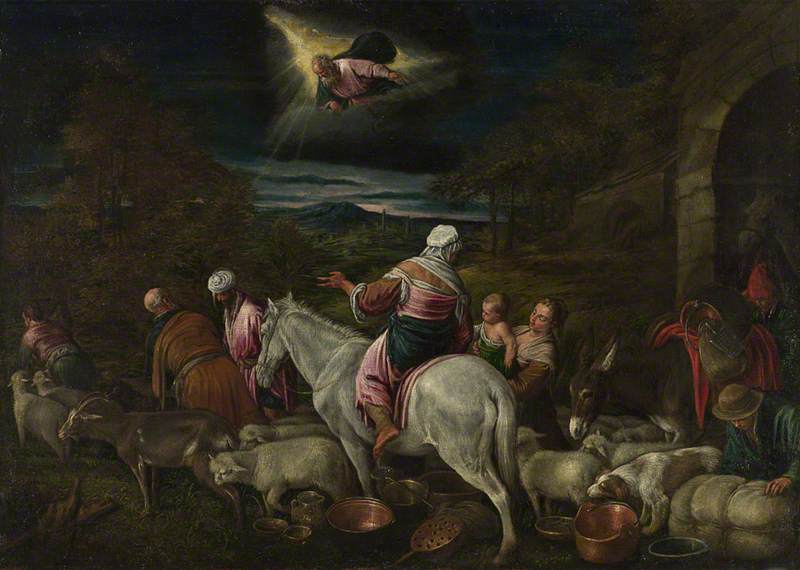
The call to break with the familiar resonates across faith traditions. And yet, for many, faith becomes a tautology born of fear: We believe in God because God commanded us to believe. Given the threat of hell, faith - even the hollow kind - can seem like a safer bet than confronting doubt, a spiritual just in case.
David Bentley Hart articulates everything that is wrong with this sort of faith in That All Shall Be Saved:
Submission to a morally unintelligible narrative of God’s dealings with his creatures would be a kind of epistemic nihilism, reducing the act of fidelity to God to a brutishly obstinate infidelity to reason (whose substance, again, is God himself). Submission of that kind could not be sincere, because it would make ‘true faith’ and ‘bad faith’—devotion to truth and betrayal of truth—one and the same thing.7
His point here is: devotion to truth and betrayal of truth become one and the same when you “believe” in something you don’t really think is intelligible. To betray one’s own beliefs out of fear can hardly be called belief at all. It is nothing more than self-preservation.
There is a broader question here about whether we can truly “believe” anything outside of a set of universal truths - and whether such truths even exist. It’s not a question I’m going to attempt to satisfactorily answer here, but to touch on it briefly: many Muslim scholars, including Al-Ghazali, believe that sincere seekers - even those outside Islam - are not condemned to eternal Hellfire. Put simply, their argument is that if someone has never encountered a compelling version of the truth, how could they be punished for not accepting it?
I am not suggesting that one abandons faith the moment doubt arises. Not at all. But doubt is not the enemy, insincerity is. And thats just what kufr is: insincerity, an active denial of your own beliefs, and a commitment to anything other the truth.
And now we wind all the way back to Abraham and that weighty command: lekh lekha, go forth. Judaism, Christianity, and Islam all revere Abraham as a prophet and role model. And if his life is indeed a guide for our own, let us ponder on the fact that his faith was not a passive one.